MODULE 05 · 02
How to correct a handwritten entry
The practical method must make every required part of the correction visible
One visible correction — not a hidden replacement
EU GMP defines the result that every correction must achieve. PIC/S inspector guidance describes the familiar practical method for paper records, while Annex 11 requires the history of GMP-relevant electronic changes and deletions to be preserved through an audit trail based on risk.
Read the complete official provision ↗Our interpretation — Paper and electronic corrections
On paper, the usual controlled method is simple: draw one line through the incorrect information so it remains readable; write the correct information nearby; add the identity or initials of the person making the correction; and add the actual date of the correction.
The single-line method is not a decorative convention. It is a practical way to comply with the EU GMP requirement that the original information remain readable. The exact position of the initials, date and reason may depend on the approved form and the organisation's SOP, but their meaning must be clear.
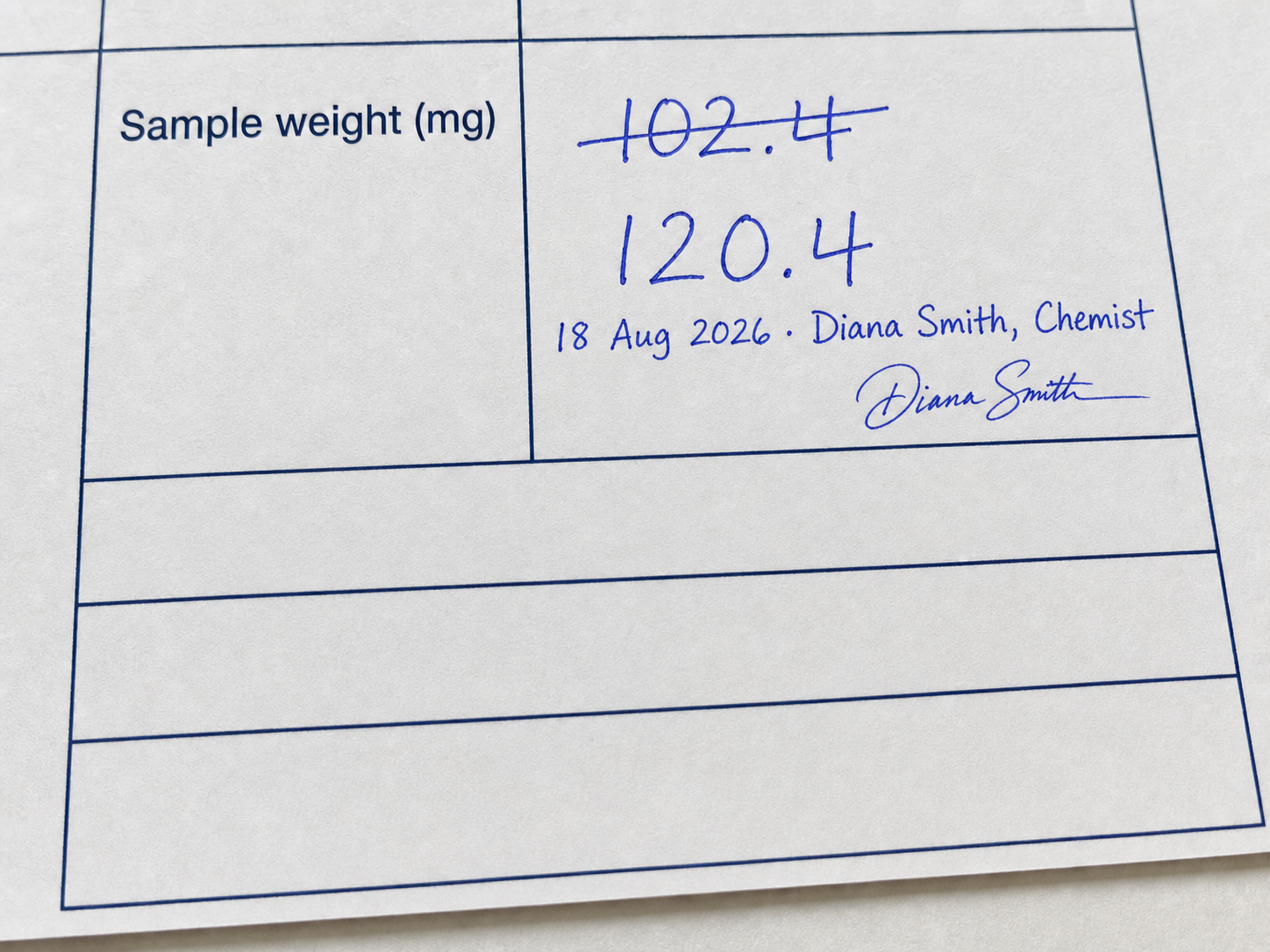
The person should correct only the information that is wrong. A whole page should not be cancelled merely to conceal one incorrect value. If the layout makes a normal correction genuinely impossible, the organisation must use a controlled exceptional process that preserves the original page and the justification for any replacement.
A second person does not automatically need to countersign every routine correction. Additional verification may, however, be required by the SOP or by the risk and significance of the corrected information.
In an electronic system, the correction must be made through an authorised function that preserves the original value and records the corrected value, the responsible user, the date and time of the change and, where required, the reason for it. This system-generated history is known as the audit trail. Audit trails and the review of audit trails are examined in detail in Modules 7 and 8.
An analyst writes Balance B-014 in a worksheet and immediately realises that Balance B-041 was used.
- B-014 is crossed out with one line and remains readable
- B-041 is entered beside it
- The analyst adds attributable initials and the current date
- The correction follows the approved SOP and does not disturb the rest of the record
The record now shows both the original mistake and its transparent correction. Nothing has been erased and the reviewer can reconstruct what occurred.